

The Art of Enjoying Osaka on a Budget — Where Savings Lead to the Extraordinary Experience of Street Karting
A boat of takoyaki in Dotonbori costs 500 yen. The Tsutenkaku observation deck is 800 yen. Osaka is a city where “cheap” reigns supreme. But this city holds another exceptional experience that becomes within reach depending on how you allocate your budget — street karting on public roads, led by a guide. Lock in your savings on food and sightseeing, then channel the freed-up funds toward this extraordinary adventure. That’s the blueprint for taking your Osaka trip to the next level.
Why Osaka Makes “High-Density Travel on a Budget” Possible
Lunch in a major European city will set you back at least 15 euros. In Osaka, however, you can experience authentic flour-based street food culture for under 500 yen. This price gap isn’t simply a matter of cost-of-living differences. At its core lies a philosophy inherited from the Edo period, when Osaka was known as “the nation’s kitchen” — the belief that serving delicious food at low prices is a merchant’s pride. From a cross-cultural perspective, Osaka’s “kuidaore” spirit — eating until you drop — stands in stark contrast to the German concept of “Sparsamkeit” (frugality). Rather than sacrificing quality to save money, Osaka pours its heart into the affordable end of the spectrum. This philosophy is what makes deep culinary experiences possible without breaking the bank.
Kushikatsu skewers in the Shinsekai district start at just over 100 yen per stick. Along the Sennichimae shopping arcade, you can find standing udon shops fragrant with dashi broth for around 300 yen. Walk through Kuromon Market, and your senses come alive with the spirited calls of fishmongers and the scent of the sea. The atmosphere of these streets is itself part of the “flavor.” Keeping your food budget under 2,000 yen while touching the heart of Osaka’s food culture is entirely realistic.
How to Smartly Cut Transportation and Admission Costs
Osaka’s main areas — Namba, Shinsaibashi, and Tennoji — are compactly clustered together. With points of interest densely packed within walking distance, you can significantly reduce the number of subway rides you need to take. Walking north from Dotonbori through the Shinsaibashi-suji shopping street, passing through Amerikamura, and looping back to Namba is a route that fills two to three hours without spending a yen on transportation. Shinsekai around Tsutenkaku is also within walking distance from Tennoji Station.
Shrines that charge no admission fees are also worth noting. Namba Yasaka Shrine features a striking architectural centerpiece — a massive lion head standing 12 meters tall with its mouth agape, welcoming visitors — that is widely known even among international travelers. Sumiyoshi Taisha, with over 1,800 years of history, is Osaka’s oldest shrine, and the graceful curve of its Sorihashi (arched drum bridge) embodies an aesthetic entirely different from European stone architecture. Historically, this bridge symbolizes “the bridge between this world and the next,” its form imbued with a uniquely Japanese spatial philosophy. Combine these destinations, and you can savor Osaka’s many faces for under 5,000 yen, food included.
Why Street Kart Adds a New Perspective to Your Osaka Trip
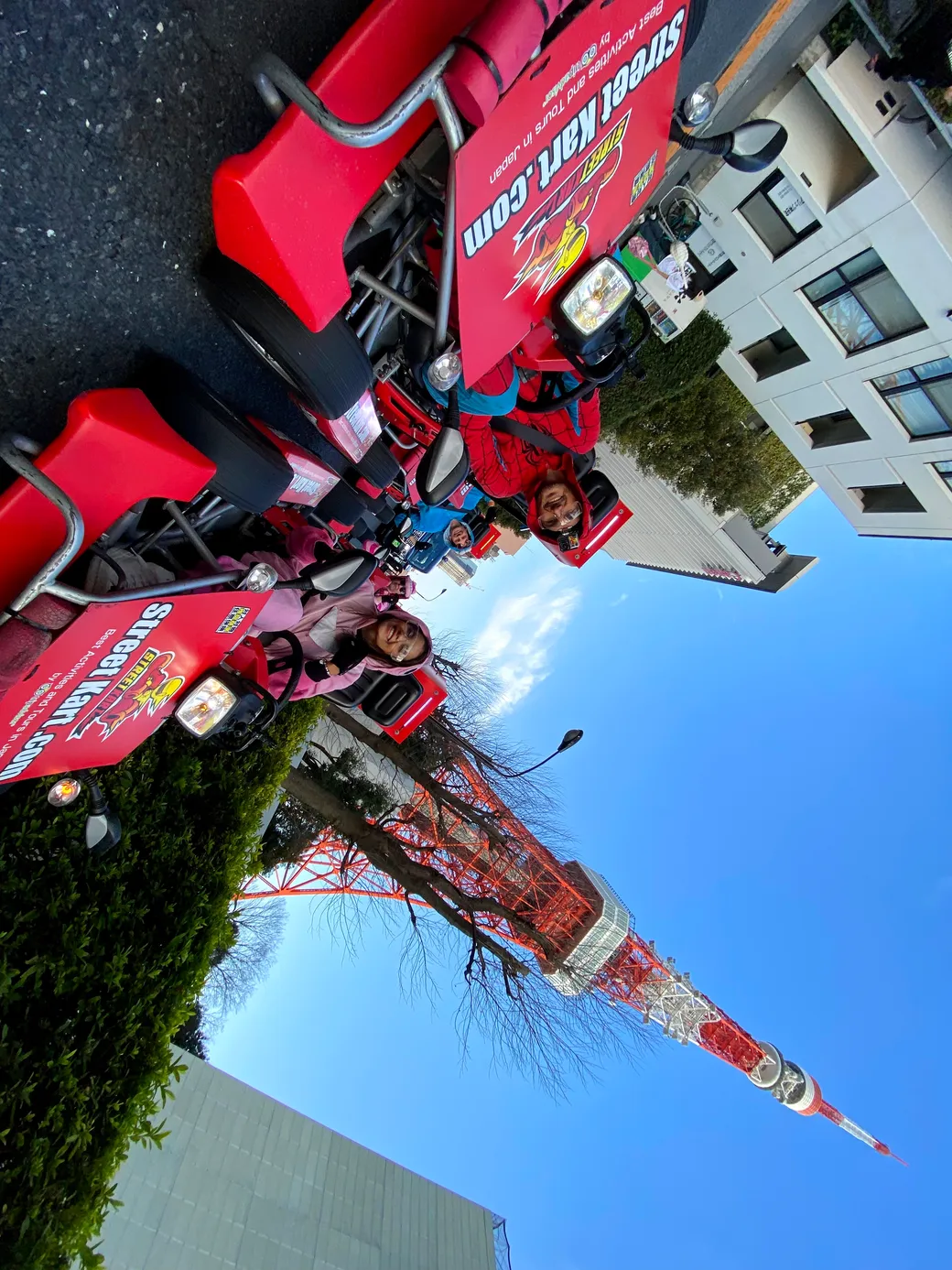
If you’ve soaked up Osaka through street food and neighborhood strolls and want to add yet another dimension, Street Kart’s street karting experience is worth considering. This is a guided public road tour following set routes, so there’s little worry about getting lost.
Notably, Street Kart is the first karting operator in the industry to deploy guides specifically trained for international drivers. Services are provided in English, making it accessible for travelers who aren’t comfortable with Japanese. The website supports 22 languages, keeping the language barrier low from the booking stage onward. Viewing Osaka’s streetscape from just a few dozen centimeters off the ground — looking up at the city — reveals a world completely different from a pedestrian’s perspective. The sensation of wind rushing through urban canyons, the rumble of the engine blending with the city’s buzz — it’s an experience difficult to replicate with any other form of sightseeing. With over 150,000 total tours conducted and an average rating of 4.9 out of 5.0, the quality of the experience speaks for itself.
Costume rentals are available, though Mario Kart-related costumes are not offered. Street Kart is an independent karting experience service with no affiliation whatsoever to Nintendo or the Mario Kart franchise. It’s a good idea to check the driving license requirements on the official website in advance.
The Design Philosophy of an Osaka Trip That Balances Savings and the Extraordinary
There’s a German saying: “Sparsamkeit ist keine Schande” — saving money is no disgrace. The same philosophy applies to traveling in Osaka. Cheap doesn’t mean low quality. In fact, in Osaka, frugality itself is woven into the fabric of the city’s culture. Even a single rule like “no double-dipping” at kushikatsu restaurants reflects a coexistence of practicality and communal spirit. Save smartly on food and walking tours, then concentrate your freed-up budget on experiences you can only have here — like street karting. It’s the skillfulness of that allocation that ultimately determines how vivid your travel memories become.
Reservations can be made at kart.st. Tour details and location information are also available on this page. Fill your stomach with Osaka’s budget-friendly street food, quiet your mind at historic shrines, then grab the wheel and burst out into the city streets. When you think about it logically, it would be hard to find another city where you can pack such vivid contrasts into a single day.
